
Greenwich Village has always been ahead of its time.
What often gets overlooked is how many of New York City’s defining moments started here.
Here are 5 things you probably didn’t know Greenwich Village was first for:
- Home of New York’s first state prison (Newgate Prison, 1797)
- NYC’s first major bohemian & artistic community (late 1800s – early 1900s)
- NYC’s first major folk music scene (1950s – 1960s)
- Birthplace of the modern LGBTQ+ rights movement (Stonewall, 1969)
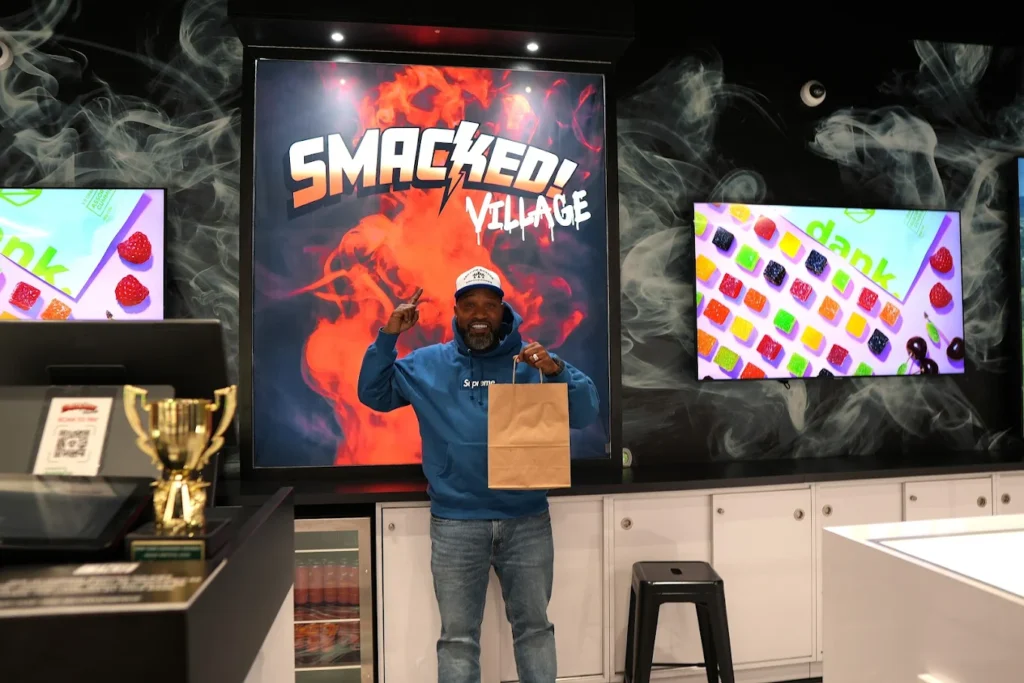
- Home of NYC’s first for-profit cannabis dispensary (Smacked Village, 2023)
Cultural Shifts that Started in Greenwich Village
Home of New York’s First State Prison
In 1797, Greenwich Village became home to Newgate Prison, New York State’s first official penitentiary.
Newgate replaced the overcrowded and unsanitary Bridewell Prison.
Positioned along the Hudson River near what is now Christopher Street, the prison was designed to be more open, better ventilated, and removed from the area previously considered NYC.
For its time, it was considered a progressive step forward for or inmate treatment in the state.
NYC’s First Major Bohemian & Artistic Community
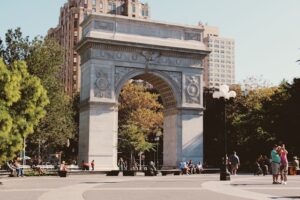
By the late 1800s, when most of Manhattan was driven by industry and wealth, the Village became known for artists and free thinkers building a life outside of those norms.
By the early 1900s, it had established itself as New York’s first true bohemian community, attracting intellectuals and creatives who would go on to shape American culture.
The Village’s layout, distance from the city’s commercial core, and more progressive social attitudes made it the ideal place for experimentation.
In the 1910s and 1920s, small publishing houses, art studios, and experimental theaters began to take hold, creating space for ideas that wouldn’t have been accepted elsewhere.
That momentum carried into the mid-20th century, when the neighborhood became a hub for music, performance, and counterculture movements that would influence the rest of the city, and eventually the country.
NYC’s First Major Folk Music Scene
Fast forward to the late 1950s, Greenwich Village became the center of New York’s first major folk music movement.
At a time when mainstream music was polished and commercial, the Village offered raw performances and political storytelling.
MacDougal Street became the heartbeat of it all, with small coffeehouses and venues like Cafe Wha?, Gerde’s Folk City, and the Gaslight Cafe giving musicians a place to perform.
In 1961, a 19-year-old Bob Dylan arrived in the Village. Alongside artists like Joan Baez, Odetta, and Dave Van Ronk, he helped shape a sound rooted in storytelling and protest.
Birthplace of the Modern LGBTQ+ Rights Movement
In 1969, the Stonewall Uprising turned into days of protests, marking the beginning of the modern LGBTQ+ rights movement in the United States.
The neighborhood had already built a reputation for openness and pushing against social norms.
Today, the Village remains one of the most historically significant places in LGBTQ+ history.
Home of NYC’s First For-Profit Cannabis Dispensary

In 2021, New York officially legalized cannabis for recreational use.
Two years later, Smacked Village opened its doors in Greenwich Village, making history as New York’s first for-profit cannabis dispensary, the second legal dispensary, and the first Black-owned dispensary in the state.
Founded by the Conner family, Smacked Village entered a new industry, with a unique set of regulations, but a rare opportunity to define what legal cannabis retail could look like in New York City.
And they chose Greenwich Village for a reason. It’s always been a neighborhood that births new ideas and cultural shifts.
Three years later, Smacked Village has become a community staple, opening access to trusted cannabis products, while hosting comedy shows, pop-up shops, and community-driven events that bring people together.
What These “Firsts” Say About Greenwich Village
Looking across all of these moments, there’s a clear pattern. Greenwich Village has never just followed what the rest of New York was doing.
It’s where the city tested new ideas first.
In 1796, it was prison reform.
In the early 1900s, it was art and culture.
In the 1960s, it was music and civil rights.
And today, it’s cannabis.
The Village creates space for things that don’t yet fully exist and gives them the room to grow.
That’s what makes this neighborhood different.
And it’s why, even now, some of the most important cultural shifts in New York still start here.